What Is EMS Training? Explained Simply – No Science Degree Required!
If you’ve heard about EMS training, your first reaction was probably one of these:
“Is it safe?”
“Does it hurt?”
“Is it a gimmick?”
“How can 20 minutes possibly work?”
These are completely fair questions, EMS training looks very different from normal exercise.
At Power & Peace, almost every client walks in slightly nervous and walks out smiling, surprised at how normal it actually feels.
So… what actually is EMS?
EMS stands for Electrical Muscle Stimulation.
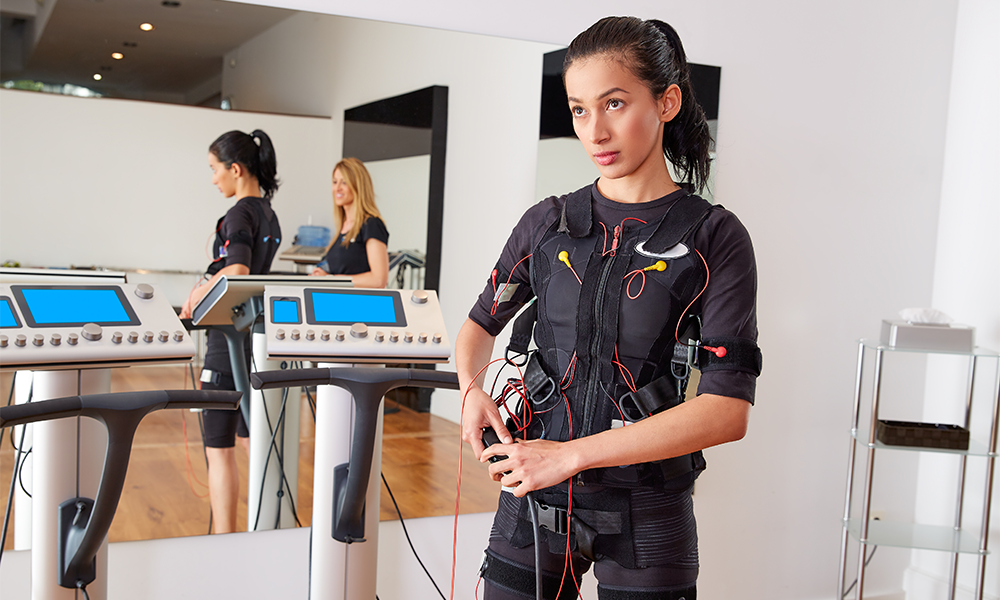
During a session you wear a specialised training suit. The suit gently sends low level electrical impulses to your muscles while you perform guided exercises with your coach.
These impulses are not random and they are not shocks.
They are copies of the exact signals your brain already sends to your muscles when you move.
Normally your brain tells a muscle to contract.
EMS simply assists that signal.
Your muscles are still doing the work, they’re just working harder and more efficiently.
Why does it feel different?
When you exercise normally, your brain can only activate a portion of your muscle fibres at once.
EMS allows more of the muscle to switch on at the same time.
That’s why a slow squat suddenly feels very effective.
Clients usually describe the feeling as:
- a deep muscle contraction
• a vibration
• a pulsing squeeze
• strange for 2 minutes… then completely normal and kinda fun!
Importantly – it should never feel painful. You are always in control of the intensity.
Why is a 20 minute session enough?
Here is the part that sounds unbelievable, but is actually the whole reason EMS exists.
A typical gym workout:
- uses a few muscle groups at a time
- includes rest between sets
- relies on voluntary effort only
An EMS session:
- works almost all major muscle groups simultaneously
- removes long rest periods
- activates deeper stabilising muscles
You are effectively doing a full body strength workout the entire time.
It’s not easier.
It’s more efficient.
That is why EMS was originally used in physiotherapy and rehabilitation before entering the fitness sphere.
What happens in a session?
Your first session is very calm and guided.
We:
- Fit the suit and adjust it to you
- Start at a very gentle intensity
- Guide you through slow, controlled movements
- Adjust everything based on how you feel
There is no shouting, no bootcamp energy and no pressure to “push through”.
It is closer to a coached strength session than a workout class.
Most people finish saying:
“That was hard… but I actually feel amazing.”
Is EMS safe?
This is the most important question.
Yes, when supervised properly.
The impulses used are carefully controlled and have been used in medical rehabilitation for decades. At Power & Peace sessions are always one to one and individually adjusted.
You are monitored the entire time and the intensity is tailored to you, your fitness level and your goals.
(We will always screen you beforehand and there are a small number of medical conditions where EMS is not appropriate.)
Who is EMS especially good for?
EMS is particularly helpful for:
- Busy people with limited time
• Women in perimenopause & menopause
• People with joint pain
• Those who don’t enjoy gyms
• Anyone wanting to build strength safely
• Beginners who feel intimidated by weights
You don’t need to be fit first.
You start exactly as you are.
What results can you expect?
Clients typically notice:
First 1-2 sessions
→ muscles waking up, posture improving
After 3-5 weeks
→ feeling stronger, firmer muscles
After 8-12 weeks
→ visible toning and improved body composition
(And a surprising number say their back pain improves)
Final thoughts
EMS training isn’t magic. You still work hard.
But it removes barriers:
- time
- Confidence
- complexity
- joint strain
It’s simply a very smart way to strength train.
If you’ve been meaning to “get stronger” for years but never found something that fits your life, EMS could be the answer.
Your body doesn’t need more punishment.
It needs the right stimulus.
Hi, this is a comment.
To get started with moderating, editing, and deleting comments, please visit the Comments screen in the dashboard.
Commenter avatars come from Gravatar.