
Is EMS Better Than the Gym? An Honest Comparison
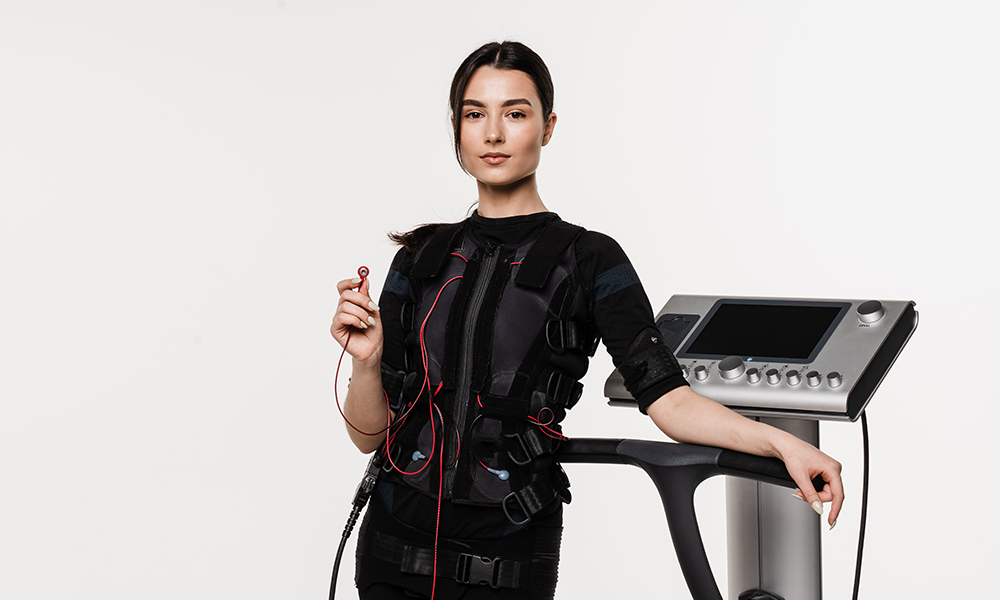
If you’re considering EMS training, you might be wondering:
“Is this actually better than just joining a gym?”
It’s a fair question.
The honest answer?
It depends on what you need.
Both traditional gym training and EMS can build strength and improve body composition. The difference lies in efficiency, structure and suitability for your lifestyle.
Let’s break it down clearly.
1. Time Commitment
Gym
A typical effective gym session:
• 45–90 minutes
• separate days for different muscle groups
• travel time
• waiting for equipment
Realistically, it can take 2+ hours out of your day 3-6 days a week.
EMS
- 20 minutes active training
• full-body session
• one-to-one coaching
• 1-2 times per week
For busy professionals, parents or anyone juggling a lot, this difference matters.
If time is your biggest barrier, EMS usually wins.
2. Muscle Activation
Gym
When lifting weights, you activate a percentage of muscle fibres voluntarily. Progress depends heavily on technique, load selection and consistency.
EMS
EMS stimulates a large number of muscle fibres simultaneously, including deeper stabilising muscles.
That doesn’t mean it’s “magic” but it does mean small movements can become highly effective.
If you struggle to feel certain muscles working (core, glutes, back), EMS can help improve that connection.
3. Joint Stress
Gym
Heavy lifting is effective, but can load joints significantly, especially if technique is off or recovery is poor.
For people over 40, with knee, hip or back sensitivity, this can become a limiting factor.
EMS
Movements are slower and controlled, with lower external load.
You still build strength, but with reduced impact and joint strain.
For many women in perimenopause or menopause, this makes EMS more sustainable.
4. Motivation & Accountability
Gym
Requires:
• self-discipline
• knowing what exercises to do
• planning programmes
• pushing yourself
Some people thrive on this independence. Others find it overwhelming.
EMS
Every session is:
• guided
• structured
• progressive
• supervised
You simply show up.
For those who want coaching and clarity rather than decision fatigue, EMS is often more appealing.
5. Cost
Let’s be transparent.
Gym memberships are usually cheaper monthly.
However:
• many people underuse them
• programmes are not personalised
• results often stall
EMS costs more per session, but requires far fewer sessions.
The real question is not “Which is cheaper?”
It’s:
Which one will you actually stick to?
Consistency beats price.
6. Results
Both methods can:
• build muscle
• improve tone
• reduce fat (with appropriate nutrition)
• improve strength
The biggest predictor of results isn’t the method.
It’s:
• consistency
• recovery
• progression
• adherence
EMS simply makes adherence easier for many people because it removes time and complexity.
Who is the gym better for?
The gym may suit you if:
- you enjoy training independently
• you like long workouts
• you want high training volume
• you love lifting heavy weights
• you have time to dedicate multiple days per week
Who is EMS better for?
EMS often suits:
- busy professionals
• women over 40
• people returning after injury
• those intimidated by gyms
• anyone wanting efficiency and structure
• people who struggle to activate certain muscles
The honest conclusion
EMS is not “better” than the gym.
It is more efficient and more guided.
For many people in modern life, that makes it the smarter choice.
The gym requires more time, planning and discipline.
EMS requires you to show up and commit to 20 focused minutes.
Both build strength.
One simply removes more barriers.
Final thought
The best training method is the one you can sustain.
Not for two weeks.
Not for January.
For years.
Strength is a long game.
Choose the structure that supports your life, not one that competes with it.
Still unsure?
You’re always welcome to try a half price session before deciding whether it suits you better than your current routine.